Polytechnic School launches Professional Master’s Program for African countries [1]
 [2]
[2] [3]
[3]
The Joaquim Venâncio Polytechnic School of Health (EPSJV/Fiocruz) launched, on December 1, a special cohort of the Professional Master’s Program in Professional Education in Health aimed at the Portuguese-Speaking African Countries (PALOP). The program brings together health workers from Mozambique, Angola, Cabo Verde, and São Tomé and Príncipe and is offered in a hybrid format, with in-person and synchronous remote activities. This first stage, which runs until December 14, is being held in person at the Regional Center for Health Development (CRDS) in Mozambique and corresponds to part of the first module (with two mandatory courses and Research Seminars I), which will continue remotely until February 2026.
In 2026, the second module (with two mandatory courses and Research Seminars II) will begin in March, with a second in-person stage. This module will continue through May with synchronous remote classes. The third module will be carried out in the second half of August and will consist of five elective courses of 30 hours each, to be completed through synchronous remote activities in September and October. In addition, an inaugural lecture will be held on February 27, 2026, in Maputo (Mozambique), jointly with the Fiocruz Master’s and Doctoral Programs in Health Sciences, with the participation of several authorities from the institution, the Ministry of Health of Mozambique, and representatives of the Community of Portuguese-Speaking Countries (CPLP).
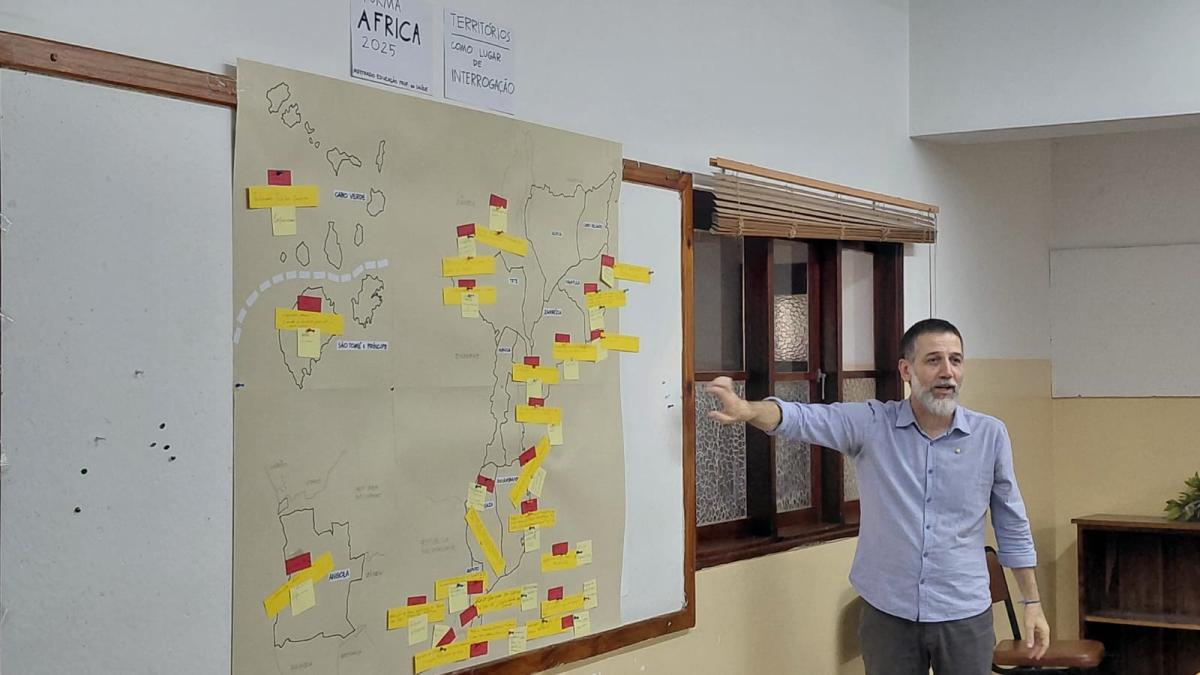
According to Carlos Batistella, Deputy Coordinator of the EPSJV Graduate Program, the training was designed to meet a demand from the National Institute of Health (INS) of the Ministry of Health of Mozambique, with the aim of strengthening the country’s health system and, above all, creating a core group of researchers and educators more closely engaged in the education of health professionals. “They are establishing the National School of Public Health within the INS, and this cohort will likely constitute a group of strategic researchers in the field of Professional Education in Health in Mozambique,” he noted.
Batistella also emphasized that the program includes students from Cabo Verde, São Tomé and Príncipe, and Angola, as it is one of the actions set out in the Work Plan of the CPLP Network of Technical Schools. “This plan was signed in June 2025 in Lisbon, Portugal, with representatives from all ministries. The call for applications was launched with vacancies open to all CPLP countries, we conducted the selection process, and the cohort was formed as follows: 25 students in total—22 from Mozambique, one from Angola, one from São Tomé and Príncipe, and one from Cabo Verde,” he explained.
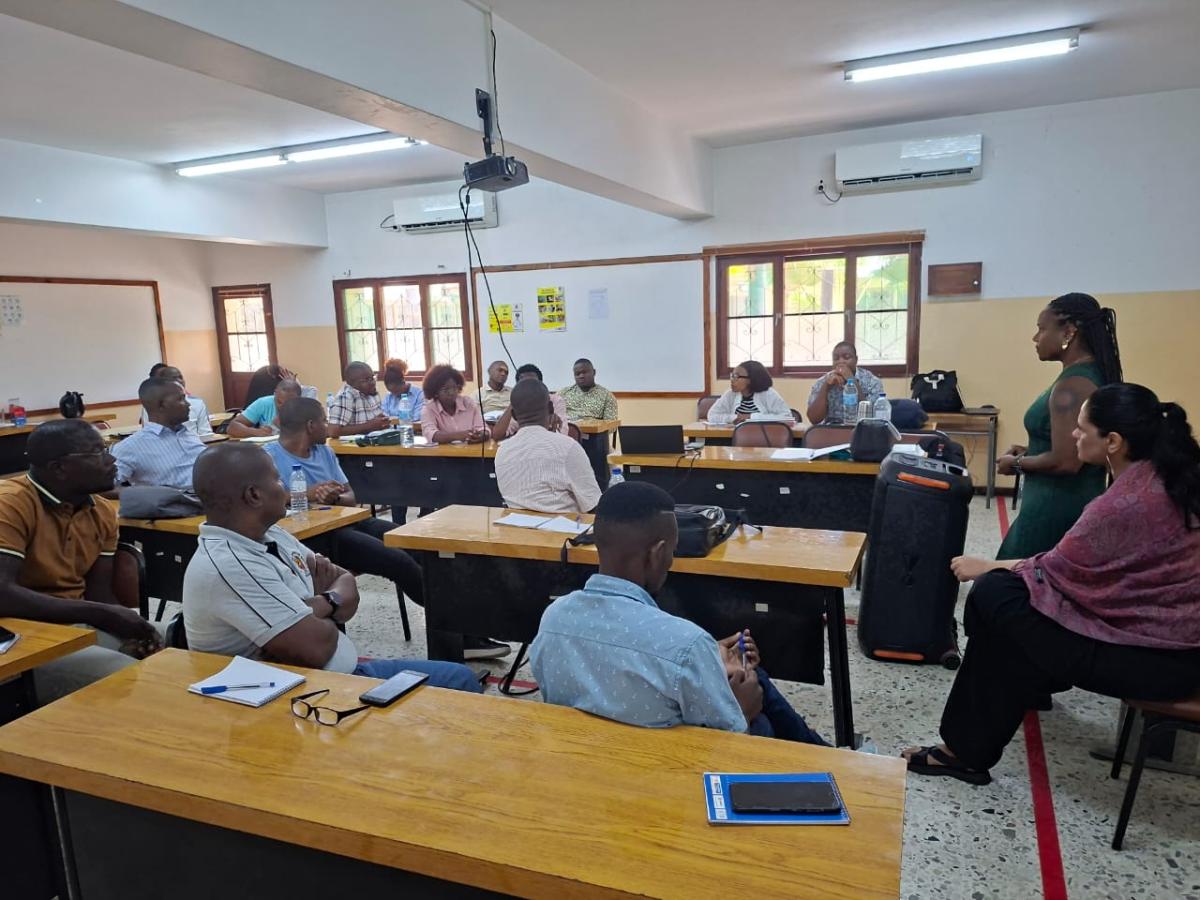
The curriculum plan for this special cohort follows the same structure as the regular Master’s program, with mandatory courses and activities. However, Batistella noted that the document is being reconfigured to reflect the specific realities and demands of the African cohort. In addition, a faculty development process has been carried out, which is reflected in the course syllabi. “We set up a study group with professor-researchers linked to the Polytechnic School’s graduate program. We have welcomed researchers from several Brazilian universities who have provided classes on the historical, political, economic, educational, cultural, and, above all, health realities of Mozambique, as well as of the other countries involved,” he said. He added: “The classroom in a program of this nature closely follows the principles upheld by the Polytechnic School—a more participatory pedagogy. We have opened channels for listening so that students can share the challenges they face as workers within health systems.”
For Ialê Falleiros, Coordinator of the EPSJV Graduate Program, the first in-person module has been very enriching, joyful, and dynamic. “After the welcome, we introduced ourselves and asked each participant to share something they enjoy doing. From that moment on, we felt very close, and it became easy to agree on the cohort’s collective commitments and on the presentation of the students’ pre-projects. May the next meetings come,” she celebrated.